01
Map the routes people actually use
Identify staff entrances, customer doors and routes from parking areas. Notice which lobbies and corridors receive the most traffic. Share these areas with your cleaning provider rather than treating every square foot as having the same requirements.
02
Identify the floor and its existing finish
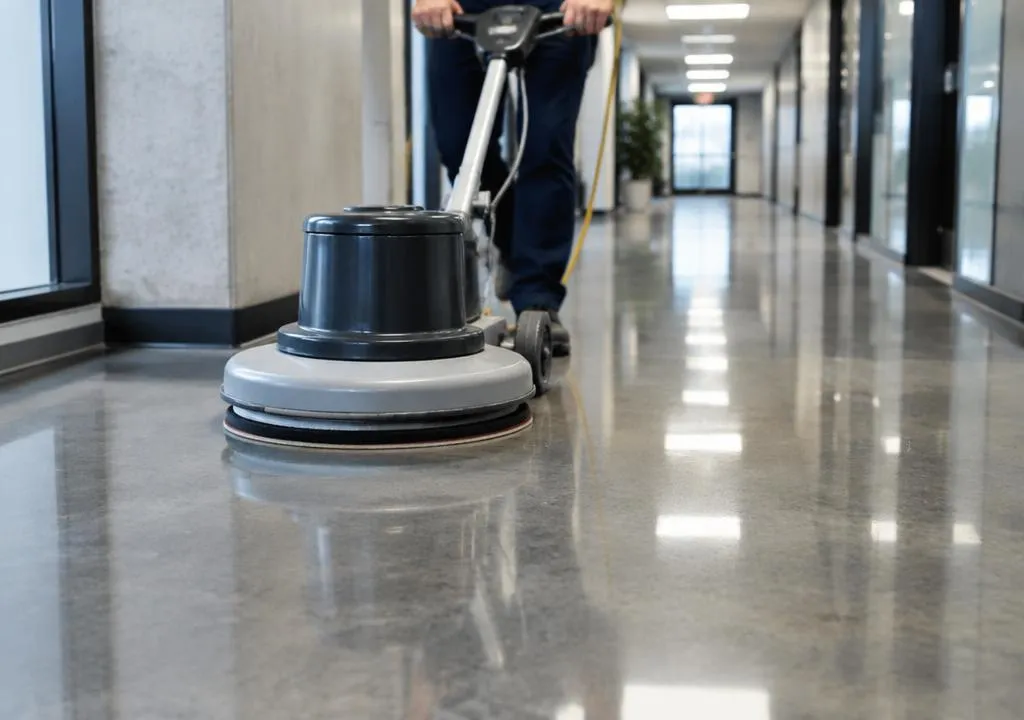
Record the flooring material and any manufacturer care instructions. Flag damaged areas or previous treatments before discussing methods. Do not assume one chemical or procedure is suitable for all hard floors. Specialist restoration and routine cleaning are different scopes.
03
Review mats and entrance arrangements
Discuss how entrance mats are maintained, who manages them and whether floor areas beneath them are included. Clarify the responsibilities of your building team and cleaning provider. These arrangements should follow your own site procedures.
04
Plan access around busy periods
Explain opening hours, peak traffic and when an area can be worked on. Review how temporary access restrictions and site communication will be managed. Cleaning should be coordinated with the people responsible for operating the premises.
05
Adjust the scope when conditions change
A fixed checklist may need discussion when weather or traffic changes. Keep a record of the areas needing more frequent attention and review these with your provider. Agree on changes to tasks or frequency rather than assuming they are automatically included.
Keep this checklist
A clearer brief. A more useful quote.
- Where is the facility?
- Which areas and surfaces need attention?
- Is this recurring work or a defined project?
- What timing and access requirements matter?
An estimate is fine when you do not have exact measurements. Share sensitive access details directly with the team later.